Food Matters – Cookbook Gifts 2011

Today on Food Matters I revealed my suggestions for cookbooks as gifts for the 2011 holiday season. But it’s very important to match the cookbook to the cook. You don’t give a book that has complicated recipes in it to a beginner, and you don’t give someone who already has 300 cookbooks the Dummy’s Guide to Boiling Water.

michael smith
Michael Smith


I started with someone who is known for producing cookbooks that are for the relatively inexperienced home cook. The latest from Chef at Home, Chef at Large, and Food Network star Michael Smith is called Chef Michael Smith’s Kitchen, in which he has put together one hundred of his all-time favourite recipes that he makes at home on a regular basis. No fancy ingredients, not too many fancy methods and a photo for every recipe.

Mark McEwan
Mark McEwan

If you are looking for a book with just a little more technique, but still fairly easy recipes to make in the Italian fashion, check out Mark McEwan’s Fabbrica. McEwan is the chef behind quite the culinary empire in Toronto, with Fabbrica being his latest restaurant, what he describes as a casual but elegant, authentic Italian eatery. As he built the restaurant he built his collection of Italian recipes, so decided to put all those together in a cookbook. He takes pride in both the restaurant and the cookbook for being authentic Italian, and says you can learn how to do it, too.

Jennifer McLagan
Jennifer McLagan

The recipes in this next book aren’t necessarily ones that require a lot of skill but it’s the ingredients that are the challenging part. This book is called Odd Bits, How To Cook The Rest of the Animal, by Jennifer McLagan. Jennifer had real hits with her previous books, Fat, and Bones, and since she’s taken care of those underused parts of animals, the Odd Bits was everything else left over. So, liver, tongue, heart, kidney, all the stuff many people shudder at just at the thought of eating it, but she takes it on in an effort to stop us from wasting an animal we’ve raised to eat and to get us new flavour sensations. This book is also full of fascinating facts about offal and if the person who you’re thinking about giving this book to already goes just to butcher shops instead of supermarket meat counters they would probably like to see this under the Christmas tree.

Natalie MacLean
Natalie MacLean

The perfect wine read for this year is Ottawa-based wine writer Natalie McLean’s second book, Unquenchable, A Tipsy Quest for the World’s Best Bargain Wines. For this book Natalie traveled the world to find bargains, we’re talking well under 20 dollars a bottle for the most part here...because there is a lot of wine out there we can experience at lower prices that is just as good or even better than the higher-priced stuff.

Other books you can consider as great gifts for this year:

Jacques Pepin: The Essential Pepin

Nigel Slater: Tender, Volume II

Jamie Oliver: Jamie Oliver's Food Escapes

Coleman Andrews: The Country Cooking of Italy

Edward Behr:  The Art of Eating

Becky Selengut: Good Fish

Ottolenghi: Plenty

My Last Supper - The Next Course

While researching this item it was a real pleasure to be able to interview Jennifer McLagan, Natalie MacLean, Michael Smith and Mark McEwan. The entire interviews cover much more detail about their books and other facets of their lives than I had time to mention on the show today, so if you'd like to hear more from them, just click on the files below to listen.

Don Genova Interviews Natalie MacLean

Don Genova Interviews Michael Smith

Don Genova Interviews and Mark McEwan

Don Genova Interviews Jennifer McLagan

Posted in Food Matters | Leave a comment

Food Matters – Ethical Holiday Gifts

World Vision
 World Vision

 We all know that the holiday season can be a time of excess. We consume an awful lot of food and drink this time of year, perhaps without thinking about those less fortunate. Today on Food Matters, I talked with All Points West host Jo-Ann Roberts about a few ideas for gifts that keep on giving in the world of food that have the added bonus of being ethical and sustainable.  One of the first places I tell people to visit is World Vision Canada.  World Vision is Canada’s largest private relief and development agency. The Canadian arm of the charity goes all the way back to 1957 and they do a great job of helping you give gifts in someone’s name that aren’t simple relief, but a way of helping people climb out of hunger and poverty on a more permanent basis.

Get your hands on a World Vision Christmas catalogue or again, go to world vision dot ca and click on Gift Catalogue, and if you’re interested in these long-term type of gifts click specifically on ‘animals’ or ‘hunger’. When you click on animals you will find quite a few listings for live farm animals you can donate to families in need around the world. For example, you can give $100 and purchase a goat and two chickens for a family in need. The chickens, as they multiply, provide eggs to eat and to sell if there are excess, as well as a source of meat.

Gift of Goats

A dairy goat can provide up to 16 cups of milk a day which is loaded with protein and minerals and is easy to digest. And the animals also provide a source of manure that is used to fertilize crops, so it creates a very sustainable circle of life for those who need a way to take care of themselves.


The menagerie of animals available has expanded since the last time I checked the catalog. You can purchase ducks, rabbits, sheep, pigs, donkeys, alpacas, a dairy cow, even a beehive and bees. Prices range from 25 dollars all the way up to filling a farmyard or stable with up to 28 animals for $2000, which can be a great gift that your office or sports group folks could all chip into.

This is not just a random distribution of charity. Along with the animals comes training. Especially for something like a beehive with which you need some specialized training in how to handle the bees and harvest the honey. World Vision wants these gifts to help families and villages with sustainable development so they can break out of the cycle of poverty and start providing a future for the children in the community. Part of helping out from here can also be contributing to clean water projects, foot pumps that help people irrigate their crops, and packages of seeds and tools to help grow and harvest more food.

Share Organics
Share Organics

If you are thinking about giving one large family gift instead of individual gifts, why not the gift of a share in a Community Supported Agriculture program? CSA’s can even be called ‘trendy’ now, and some farms even have a waiting list for people who want to join. I’ve talked about a couple of them in the past on the show, but CSA’s run like this: You pay a farmer up front, and this is a great time of year for them to have some money coming in, and then during harvest season you either pick up or have delivered a box of the best produce they have to offer that week which is a share of what is being produced at the farm. It’s a great way to increase your vegetable and fruit intake, and at the same time you’re helping a farmer stay in business and have a guaranteed source of income for theyear.

And if you can’t get access to a CSA, why not consider an organic grocery delivery service like Share Organics, which delivers, mostly by bicycle, to many communities on South Vancouver Island including Victoria and Langford. They use as much as possible Vancouver Island products to put in your box.


Denman Island Chocolate

For stocking stuffers, I like to look local producers to help keep them in business and either fair trade or organic. Denman Island Chocolate has some great chocolate Santas available this time of year, along with the regular nine different varieties of chocolate bar. You could always introduce a friend to some fair trade, organic coffee from Salt Spring Coffee and why not some Vancouver Island Salt, produced in the Cowichan Valley? Giving a gift basket stuffed with local ingredients is a great way to say I care.

I will be back next week with my last minute cookbook suggestions and don’t forget our contest is still running for that brand new KitchenAid food processor. To enter the contest, which has a deadline of December 19th, go to this post and scroll down to the comments section to submit your entry.

To learn more about chocolate bar stocking stuffers, many of which are fair-trade and/or organic, you can listen to my conversation with Jed Grieve about the 70-bar selection of chocolate available at Cook Culture in Victoria.  Jed starts off by talking about Victoria chef David Mincey, who is responsible for bringing all this wonderful chocolate to Canada.

Don Genova and Jed Grieve Talk Chocolate


Posted in Contests, Food Matters | Leave a comment

Food Matters – Kitchen Gear Gifts 2011

Miyabi
Miyabi Knife

****To enter the KitchenAid food processor contest scroll to the bottom of the page and post your entry in the Comments section*****

With Christmas only a couple of weeks away some good advice is always welcome when it comes to gift giving, especially in an area where there are so many choices, like the kitchen. On Food Matters on All Points West this afternoon I featured a pile of kitchen gadgets and cookware, and a chance for you to win a valuable appliance that will look right at home on your countertop.

Cuisipro Grater
Cuisipro Grater

A good cook can cook in any kitchen with any kind of equipment, but why should you have to when there are so many good things out there for you to take advantage of. Now, I’m not talking about those gadgets that purport to make miracles in the kitchen and then sit unused in your junk drawer. I’m talking quality stuff that in some cases will last you a lifetime and may even be passed down to your children...this year I took a tour of Cook Culture in Victoria with owner Jed Grieve. I've been teaching cooking classes there for the past year, and it's a perfect spot to keep up with all the trends in cookware.   Here are some of the highlights, starting off with a microplane box grater from a company named Cuisipro. Jed says this Accutec line is laser cut from stainless steel and has been improved by making the body all meta; before it had plastic sides which tended to crack over time.  And there's a great little removable pinch bowl that your food gathers in at the bottom of the grater.

From laser-cut stainless steel we go to something a little more organic...

Boos Board
Boos Board

Wood and paper! This is one of those things that we take for granted, but when you get something good you wonder why you never had it before. So I brought in two different cutting boards, one made of wood that you shouldn’t put in your dishwasher and one that you can that is actually made of paper.
Jed:  "Boos Boards are made of Eastern hard rock maple...high quality, and long lasting.

Epicurean Cutting Board

The other company is Epicurean.  This is pressed paper mixed with a food safe epoxy that is durable and dishwasher safe. They replace the plastic boards." Jed told me everyone went to plastic boards in the 80’s and 90’s because we thought wood actually promoted the growth of bacteria. But now we know that wood actually can limit bacterial growth...and the plastic boards are harder on your knife edges than wood and paper.

Morimoto Miyabi
Morimoto Miyabi

If your giftee likes sharp knives and is a fan of Iron Chef America or even the original Iron Chef Japan then you will have to put this in their Christmas box. You’re holding the Morimoto edition of a new line of knives called Miyabi from Henckels. For Iron Chef fans Masaharu Morimoto is one of the Kitchen Stadium chefs and this line of knives was designed with his help. Jed says these knives are a good entry by the German company Henckels into a Japanese-inspired knife: "Instead of starting from scratch Henckels bought a well-established Japanese knife company and came out with a line of knives that matches Japanese blades with Western-style riveted handles. The blades are made from 64 layers of steel for added flexibility and a tremendous cut." This is a knife that is a bit of a splurge at $200, but it makes a great gift for someone just starting out in the kitchen or someone who has a whole batch of knives that aren’t good for anything but prying the lid off a jar of pickles. Will last forever with a high-quality handle and blade.

Other kinds of durable kitchen goods that are hot this year include Staub enamelled cast iron cookware, cast iron fry pan, Bamix hand blender, pizza and bread stones, pans and knives... My entire conversation I had with Jed is here for you to listen to as an mp3:

Don Genova interviews Jed Grieve

Now the really fun part...a recipe swap with a really great prize for one lucky listener....

KitchenAid Food Processor White

The KitchenAid folks in Toronto have offered up one of their brand new models of food processor, the 13-cup model that retails for about Four Hundred Dollars! All you have to do to qualify to win is to post one of your Holiday Season recipes in the comments on this blog entry which calls for the use of a food processor in the method..  Deadline is December 19th. We will announce the winner on my Food Matters column of December 21st, so it will be an early Christmas gift for one of you. There are only two rules...one, you must be a resident of Canada, and two, if the recipe is not your own, please credit the source when you enter it. Uncredited recipes will NOT be eligible for the prize.

Posted in Contests, Food Matters, Uncategorized | 19 Comments

Food Matters – Artisan Edibles Ideas for Holiday Entertaining

las vegas
Holiday Time!

It’s a time of year when all the cookbooks get pulled off of the shelves, family favourites are clamoured for and we say, ‘just one more piece of fruitcake won’t hurt, right?’ Food plays a huge role in the holidays, and I think you should put local products on stage with your Christmas pageantry.

Every good cook knows that preparing ahead of the big meals is key, and I guess I could argue that I start preparing in the summer and fall when I put up my preserves that will help me impress my guests at this time of year. But I know not everyone has my zeal for canning or freezing, so I have some suggestions that will help you showcase local products over the next few weeks with some easy recipes to get them on the table, as they say, with no muss and no fuss. Well, maybe a little bit of muss… 

DSC 7951
Cory Pelan at The Whole Beast

First I want you to consider your sources…sources which I’ll put on my blog, and people can feel free to recommend their own as well, since I’m sure there are some I’m not aware of.

- You can really shine just by putting good bread on the table, so make sure you check out your local bakery, and I’m happy to say there are a growing number of artisanal bakeries on Vancouver Island and the Gulf Islands. Order ahead if you can and make sure you know their opening and closing hours over the holidays.
 

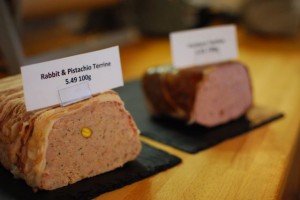
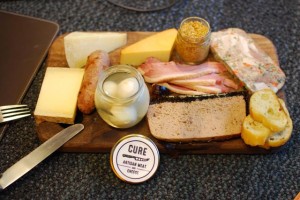
- Butcher shops and charcuterie shops. This is really where you want to go if you want high quality meats and the advice to go along with it. Think about the great charcuterie places I’ve featured on this blog before like the Whole Beast Artisan Salumeria and Markt Artisan Deli in Nanaimo. These are people who can help you put together an amazing cured meat or pate platter complete with pickles and other condiments that go well.

Hilary Abbott
Hilary Abbott

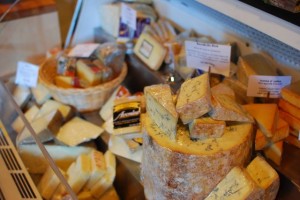
- Cheesemakers: We have excellent Island cheesemakers. Hilary’s here in Victoria and Cowichan Bay, Little Qualicum Cheeseworks and Natural Pastures from up Island, Saltspring Island Cheese and Moonstruck Organic Cheese from Salt Spring Island.
- Fishmongers, some good shops in Victoria, Cowichan Bay, Duncan, Nanaimo and more. This is where it really pays to phone ahead and get your orders in early because the seafood supply can be limited. Try Cowichan Bay Seafood in Cowichan Bay, Mad Dog Crabs in Duncan, or Finest At Sea in Victoria.


DSC 9367
Seared Tuna and White Beans

Now for some recipes:  One of the dishes I made for Jo-Ann Roberts on All Points West yesterday was an albacore tuna loin brushed with olive oil, then sprinkled with Organic Fair Old Bay Spice, and seared quickly on all sides in a hot cast iron fry pay. You can download the recipe in Word format by clicking here. How about the recipe for Fanny Bay oysters and preserved lemon aioli? Click here for that one. Get your preserved lemons at Stage Small Plates Wine Bar or various specialty shops in and around Victoria.  For the hazelnut meringue recipe, try this one from the Country Living website.  All I did was to replace the plum topping you'll see in the recipe with some Deacon Vale Farm preserves. I'd love to hear from you about where you purchase your artisan food products on Vancouver Island, the Gulf Islands and the Sunshine Coast, just enter a comment below.  And be sure to tune in next week to All Points West, when on Food Matters, just after the 4:30 news on Wednesday, Dec. 7th, we launch a contest with a grand prize of a brand new KitchenAid food processor!
 

Posted in Food Matters | Tagged , , , , , , | Leave a comment

Food Matters – Out of Hand Artisan Fair and Winter Markets in Victoria

outofhand
Out of Hand Artisan Fair

This week on Food Matters I talked about getting a start on shopping for not only holiday gifts but the kinds of produce you can still find at winter editions of farmers markets. This weekend, November 25th to 27th, marks the 23rd edition of the annual Out of Hand Artisan Fair, now held at the Crystal Garden in Victoria.  The producer of the show, Ramona Froehle-Schact, says gourmet food artisans have become a larger part of Out of Hand for the past few years.  Now the food vendors have their own section where tastings take place along with the sales and there will even by tasting of mead from the Tugwell Creek Meadery this year.  Some of my favourite food people will be on hand, including True Grain Organic Bakery, Organic Fair, Untamed Feast (dried wild mushrooms) and delicious preserves from the Camille's Canning Program.

winter market preview

I also welcomed to the studio this week Philippe Lucas and Maryanne Carmack of the Victoria Downtown Public Market Society. They talked about the winter markets coming up in the near future and the kind of products that are still available this time of year. Check their website for more details. The next market is Saturday, December 3rd in the Inner Courtyard of Market Square.

If you have a favourite food fair or winter market coming up in your neighbourhood that you would like to share, just type it in the comments section below.

In the weeks ahead I'll have much more holiday programming in store, including ways to give ethical food gifts, my annual look at the best kitchen equipment available, and a couple of recipes using local ingredients sure to wow your party guests.

Posted in Food Matters | Tagged , , , , , | 1 Comment

Food Matters – Eggzactly What Do You Mean By That?

eggs sm
Eggs!

You can find a carton of them in almost every fridge in Canada. Canadians love eating eggs...about six BILLION eggs every year. There didn’t used to be much of a choice in eggs other than the size, small, medium, large, extra-large. Wandering into a grocery store today, though, presents us with a now-dizzying array of different kinds of eggs.
 

There are the ones we’re used to, plain white eggs. Small, medium, large, extra-large. Then there are brown eggs. Then there are free-run, free-range, or organic eggs. Eggs that somehow have extra omega-three fatty acids content. Then there are the eggs that you might buy at your local farmers market...how do you know what goes into them?

I spoke with Leanne McConnachie, who is the Animal Science Director of Farm Animal Programs with the Vancouver Humane Society. She told me that people are now more than ever concerned about how their eggs are produced, and she was a wealth of information when it came to the labelling distinctions.

 
Free range Hen
Free range Hen

- 95 percent of the eggs produced in Canada come from so-called ‘battery hens’. In BC we are at about 85 percent. Main issues are from the animal health standpoint. A hen should have a nest, and there are no nests in the cages they are raised in. They can’t flap their wings, forage, or move anywhere. 5 to 7 birds are crammed into each cage, and there are thousands of birds in a barn. There are health implications as well, sores on feet, the birds get de-beaked so they can't peck at each other, they often have their legs collapsing, loss of feathers. Eventually they just mostly go into dog food once they have outlived their laying life. The eggs themselves are safe to eat as certified by the Canadian Food Inspection Agency, but Leanne says how can the quality of the egg be that good when the chicken it comes from isn’t that healthy? Salmonella can be a problem since there are weaker shells because of the poor health. Avian flu of course becomes a big problem when you have that kind of density. But the jury is still out from a scientific viewpoint on this, there are some conflicting study results.

The environment is also at risk because of the amount of manure and ammonia gas produced by these chickens living in such a concentrated space.  Birds are allowed to be raised like this because it's easy. It’s very easy for farmers to produce this kind of egg, it’s more automated, you can put many many more birds in one barn because you can stack them on top of each other, it’s a commodity from a factory farm. 

Alternatives: Free-run: The chicken is not in a cage. But there are no standards in force right now. Nobody checks it. Whatever the farmer says it is. Some free-run barns are not that great, they need nests and perches.

Free-range: Means they have access to outdoors.

Certified organic: Certified organic feed and pasture, one third of their lives must be spent outside. Usually an independent auditor goes around every year or 15 months to inspect the farm.

Bio-dynamic, goes beyond organic, also inspected.

Omega-3 eggs: That doesn’t mean free range. Unless it says free range or cage free, it’s an egg from a caged hen that has been given a special feed. A free range hen naturally has more omega-3 because of its higher diet of grasses and bugs. Colour in the yolks comes from the variety of diet, but it does vary. Chefs say whites are thicker and they like them better for cooking.

When you’re buying eggs at a farmers market, ask questions of the farmer. Go and visit a farm and see how the chickens are being raised.

We are seeing some encouraging changes in the egg industry right now. McDonald’s in Europe is very progressive and sourcing eggs from non-battery hens. Nothing happening in Canada with McDonald’s, though. Part of the problem is political.  Supply management of eggs is run by the large cage operators.
But big companies: Compass Foods, a large food distributor, supplies cage-free eggs on demand. UVic is included, and have switched 100 percent to cage free shelled and liquid eggs.
Terra Breads, audited free run eggs. Lots of restaurants. City councils, Victoria and Duncan included. Hellman’s Mayonnaise on their ‘half the fat’ mayonnaise. And Overwaitea Foods is working with the Humane Society on labelling descriptions so you actually know what you’re getting. Green-red-yellow system as well at point of sale.

Price differences? There can be a 2-3 dollar difference per dozen eggs, but think of it more per meal, or per egg. Maybe 1 dollar more for free-run, but it comes down to pennies or up to a 25 or 50 cents more per meal. But people are still voting with their wallets to a certain extent. That’s why the Humane Society would like to see the point of purchase labelling to remind people of the benefits to the environment and to the chickens. 

And what about all the municipalities that are allowing people to have backyard chickens for eggs? The Humane Society can't in good conscience support it, would really like to see it done right with gold standards for care. It is a certain amount of work to take care of a few chickens, and even people with the best intentions sometimes find it’s too much. And there has been some ‘chicken-dumping’, particularly in Seattle where the zoo started finding chickens that had been popped over the fence into their property.  For more on this go to Chicken OUT!

Update: When I was talking with Leanne McConnachie I mentioned the McDonald's television commercial airing in Canada right now. The major selling point of the ad is that McDonald's uses the same eggs you can buy in the grocery store. It makes no claims or mentions about where those eggs actually come from.  Today Leanne sent me a link to a news story about McDonald's in the United States ending a contract with an egg producer when the company learned of a video produced by an animal rights group showing horrendous conditions at the factory farms.  You can read the story and see the video here. Warning: There are some very unpleasant images in this short video. Viewer discretion advised.

Perhaps McDonald's should be a little more proactive in discovering just how chickens are treated by the companies that supply it with eggs. 

Posted in Food Matters | 4 Comments

Food Matters – St. Jean’s Cannery

DSC 8726
Part of the big can

Fifty years of operation for any business is a huge milestone, and when it comes to the fishing industry on the West Coast, a business with that kind of longevity is becoming more and more rare. Today on Food Matters, I tagged along for the celebrations at the St. Jean’s Cannery in Nanaimo, which has been serving commercial and sport fishermen since 1961.

DSC 8720
Going back in time...

 St. Jean's started from humble beginnings in 1961 in the kitchen of Gerard St. Jean's mother and father. His father practiced smoking oysters in the kitchen, ruining his mother's plants and smearing her typewriter ink on the homemade labels which he stuck on plastic bags full of oysters he would go around and sell in the local bars. Now they employ just over 100 people in Nanaimo.

DSC 8747
One of the smokers

Custom smoking of seafood products is still a mainstay of the operation, with most of the sports fishing lodges up and down Vancouver Island sending the catches of their clients to St. Jean’s to be turned into lox, hot smoked salmon, cured candied salmon or smoked, canned fish. They will even take fish you buy off a commercial fishing boat and process it just the way you want it. St. Jean's is a relatively small cannery by West Coast standards, but how many of those huge canneries are still open? The fishing industry has been in a sharp decline now for many of those 50 years St. Jean’s has been running, but Gerard St. Jean credits the size of their operation as one of the main reasons they are still successful:


DSC 8718
A Family Affair

"Well, it used to be that the canneries were all huge, unionized places, but now it's the smaller, locally run places that have survived…along this road here in Nanaimo there are three small canneries now, all owner-operated.  Sure, we work hard, but you run your own operation...and I get the winters off, so I can go skiing all the time, and that's good!"

DSC 8732
Shipping Room

It is very much still a family business, with Gerard’s brother playing a large role in the mechanical operations of the plant and other family members pitching in as well. They ship seafood all over the world and pack and smoke for large and small fishing companies alike. And they’ve gone beyond simple canning and smoking, as well, producing clam chowder, antipastos, pates, even canned wild chanterelle mushrooms, some 80 different products in all.

DSC 8703
The Big Can

For the party at the cannery, they pulled out all the stops. There were bands playing, there were tours of the cannery, many of the companies who use St. Jean’s services were showing off their products…and, there was the world’s largest salmon can.  Gerard says the idea of this can came one day when the management team was all crammed into his office planning the anniversary event: "We said that we need a meeting room, a conference room, and then we got the idea that we should just build a big can right out there in the parking lot! And then we decided to make a bit of a museum of it, so in the summer people can have a little tour and learn more about the company and buy some products."

DSC 8724
Nanaimo's Newest Landmark?

I predict that this can is going to become a real tourist attraction...who wouldn't want their picture taken beside a giant salmon can???

Posted in Food Matters | Tagged , , , , , | Leave a comment

Food Matters – Defining or Measuring Sustainability

DSC 9344
Persimmon on my backyard tree

When I started our Food Matters column a few weeks ago on All Points West, I asked listeners to take part by sending us questions and story suggestions about living a sustainable food life, and you responded. I was particularly struck by one of the first questions that came in from Ninon St. Denis of Royston: "Firstly, who says something is actually sustainable... many company presidents, it seems, claim that their food, meat, or fish are sustainable. Who defines it as such?"

It's an excellent question...but I can’t say that I have a crystal clear answer to who defines what is sustainable. It can depend on what kind of food you are talking about or even the industry to which the word has been attached. One company I contacted that distributes organic and fair trade food products told me sustainability is measured more by your heart than your head, and when I asked if they thought organic foods are sustainable the answer was, ‘they are more sustainable’ than non-organic foods.

I had more luck with The David Suzuki Foundation. I got in touch with Jodi Garwood at the Foundation, who is one of the people behind a new webpage at the Foundation called ‘Eat For Healthy Oceans’. Jody told me the definition of sustainability the Suzuki Foundation has used before comes from the United Nations World Commission on Environment and Development back in 1987: Sustainability is “meeting the needs of the present generations without compromising the ability of future generations to meet their needs.”

She went on to quote the Sustainability within a Generation document on their website:
“Sustainability means living within the Earth’s limits. In a sustainable future, no Canadian would think twice about going outside for a walk or drinking a glass of tap water. Food would be free from pesticide residues, antibiotics, and growth hormones. Air, water, and soil would be uncontaminated by toxic substances. In a sustainable future, it would be safe to swim in every Canadian river and lake; safe to eat fish wherever they were caught. Clean, renewable energy would be generated by harnessing the sun, the wind, water, and heat of the Earth.”

Those are nice mission statements, but they don’t really sound like a way to measure anything...so I’m searching for something that is a little more measurable. Funny how when you start paying attention to something it pops up all over. This week I received press releases from a company in Costa Rica called Cayuga Sustainable Hospitality, and a South African wine brochure in which all the wines are accredited as Integrated Production Wine, a ‘voluntary’ sustainability program that assures buyers that grape and wine production is undertaken with due consideration of the environment. In the case of Cayuga Sustainable Hospitality, it runs a series of resorts and eco-lodges that operate under certificates of Sustainable Tourism granted by the Costa Rican Tourism Board and there are five different levels of sustainability a company can achieve, so in this case there are strict standards they have to meet. The concept extends to the restaurants at the resorts that serve locally produced foods. They also have operating standards, for example, that see food scraps and peelings from both guest and staff kitchens being fed to pigs; their manure creates methane gas to fuel the staff kitchen stove.

Closer to home, there is The Global Aquaculture Performance Index (GAPI), which was developed by Dr. John Volpe and the Seafood Ecology Research Group right here at the University of Victoria. This index measures many different factors involved in producing farmed fin fish in different countries around the world and makes comparisons as to which country is doing it in the most sustainable fashion. So the index looks at what’s necessary to produce the fish in the form of how they are fed, the amount and type of energy used in the infrastructure, any pollutants or discharges to the environment and levels of escapement. I’m simplifying it a lot, but Canada scores better than the world average on the index when it comes to fin fish aquaculture of all types, a little worse than average if you are only looking at Canada’s Atlantic salmon production.

The GAPI is a little complicated, so the question is, how can the average consumer be assured of real sustainability when they are shopping for food products?

From an environmental sustainability side you can start by shopping organic because harmful pesticides or chemicals are not used in production...from an ethical and profitable point of view, think about buying fair trade...part of being sustainable also means making a profit, and certified fair trade products try to make sure the farmer is getting enough return on their investment to be profitable. On the seafood side there are now several different agencies you can visit online, or via a wallet-sized card to help you make sustainable seafood choices. There’s Oceanwise, and Seachoice, for example, as well as the Marine Stewardship Council. Do they all differ in their approach to determining what is sustainable? Probably. Do some homework, read about how they measure sustainability and send them questions.

Posted in Food Matters | 1 Comment

Food Matters – The Pumpkin Parade

pumpkin don
pumpkin don

Although I look pretty happy in this photo, it was only because my parents were allowing me to sell our pumpkin harvest to passing motorists at the end of our driveway. The more pumpkins I could sell (25 cents for small, 50 for large), the more change would jangle around in my pocket so I could buy really good tasting stuff like candy bars and jujubes.  I hated pumpkin and squash when I was growing up, with the exception of my Aunt Polly's sweet pumpkin pies topped with whipped cream.

Tortelli di Zucca
Tortelli di Zucca

It wasn't really until I moved to Northern Italy for a year and started eating the traditional 'tortelli di zucca' that I was converted to enjoying a savoury pumpkin dish.  And why not? The secret ingredient in the pumpkin filling for the tortelli is a handful of crushed-up amaretti cookies. Along with a rich sage-butter sauce and a snowfall of parmigiano-reggiano cheese, who could not like them?

Now I make these often and it has become kind of a signature dish for me, especially for students taking my Pasta 101 courses at Cook Culture in Victoria.  The recipe, including the method for making basic pasta dough, is pasted below.

pumpkin creme brulee
Pumpkin Creme Brulee

The other recipe I made for the special edition of Food Matters recorded for All Points West last week was a pumpkin creme brulee.  Creme brulees are actually very easy to make, and you can get a fancy creme brulee torch at a cookware store or just use a plumber's propane torch like I do...but be careful when you play with fire, okay?

The recipe for the creme brulee was found on Epicurious at this link.  I didn't have time to make the pie crust as recommended in the recipe, so I just put it in a nice pie dish and baked it, with fantastic results.  You can also pour the mix into individual serving-sized ramekins on a baking sheet and throw that into the oven for about the same amount of time recommended for the larger pie shape. It will make about 8 small ramekins.

And now here are the Tortelli di Zucca and pasta dough recipes, buon appetito!

Tortelli di Zucca – you will find almost as many different versions of this recipe as there are towns in Emilia-Romagna. None is ‘the’ recipe. This is my own variation. Feel free to make changes!

Ingredients:
1 recipe pasta dough (recipe follows)

For the Filling:
1 pound pumpkin, or squash, seeded and cleaned of fibres but not peeled
Olive oil
1 small package amaretti cookies, finely crushed
½ tsp nutmeg or cinnamon
1 egg, beaten (optional)

For the sauce:
1 bunch sage, stemmed, washed and dried
¼ to ½ pound butter
To Finish: Freshly grated Parmigiano-Reggiano cheese

Method: Make the pasta dough and set aside for at least half an hour.

Pre-heat the oven to 350F. Place the pumpkin or squash skin side down on a baking sheet and drizzle with olive oil. Place on middle rack of the oven and bake until fork tender, about an hour. Remove from oven and let cool until you can peel the skin from the squash. Then cut it into chunks and mash together with the amaretti, nutmeg or cinnamon and the beaten egg if the mixture is too crumbly. Set aside.

Roll out the pasta dough with your machine, eventually to the thinnest setting. Lay one sheet on your work table and at regular intervals, place tablespoonfuls of the filling in a line down the centre of the sheet of dough. Cover with another sheet of the same length. Carefully press the dough together around the filling, removing any air bubbles. Then cut away the excess dough, leaving a thin border around the filling, using a sharp knife or fluted pastry wheel.

Boil a large pot of salted water. Gently place the tortelli in the water, in batches if necessary, to prevent crowding. Cook for about 3-5 minutes, and remove from the water with a slotted spoon to serving bowls. Top with the sauce. To make the sauce, simply melt the butter over medium heat in a frypan and add the sage leaves, cooking until the leaves just start to crisp. Spoon some sauce over each dish of tortelli and top with the grated cheese.

Basic Egg Pasta Dough
I always make my pasta dough in a food processor now because it is easier, neater and produces an even mix of the ingredients in just a few seconds.

Ingredients:
1 ½ cups all-purpose flour
2 large eggs
¼ tsp salt
2 tsp vegetable or olive oil
1-5 tsp water, if needed
Additional flour, if needed

Combine flour, eggs, salt and oil in a food processor fitted with the metal blade. Process until well-blended and the dough starts to hold together in small, sticky crumbs that can easily be pressed together. This should only take about 5 to 10 seconds. If the dough is too dry and not sticking when you press some between your finger and thumb, sprinkle in the water, one teaspoon at a time, process after each addition of water until you get the right consistency.

Dump dough onto a work surface and work together, kneading for a few seconds until you get a smooth ball. Wrap dough in plastic wrap or set on a plate and cover with an inverted bowl and let rest for minimum 30 minute before working with it. You can keep it in the fridge for up to four hours but return it to room temperature before you start working with it.


Posted in Food Matters | Leave a comment

Food Matters – Merridale Estate Cidery

DSC 9290
Cider Apples

Hi everyone...I am SO busy today I haven't got the time to do a full blog post.  But if you listened to Food Matters today and want more information about Merridale Estate Cidery just click here.  I'll post more about my visit to the cidery tomorrow!

Posted in Food Matters | Leave a comment