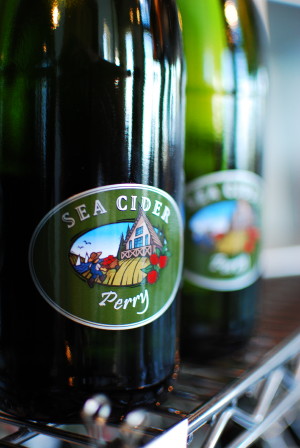
Island Artisans – ‘Perry’ cider at Sea Cider

DSC_2457This week on Island Artisans I told the tale of how one of the most authentic 'perry' ciders came to be made once again on Vancouver Island, at Sea Cider Farm and Ciderhouse.

These days with so much of our fruit imported to BC from all over the world, it’s easy to forget that this province, and especially this part of Vancouver Island, was once a haven of agricultural diversity.  We’ve lost a lot of the heritage species of fruit trees that were brought here by the early settlers, but every so often, a forgotten fruit pops up and once again thrives.

Back in 2007, an abandoned orchard was discovered on the Saanich Peninsula.  In the orchard, about a dozen pear trees.  Not culinary pears, though, perry pears; that is, pears that have to be crushed, with the resulting juice fermented into a pear cider.
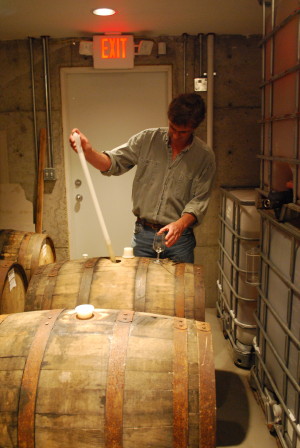
084 The perry pear has so much tannin in it your mouth might pucker shut permanently. Alistair Bell (in the photo at left) was the cidermaker when someone from the BC Fruit Testers Association brought the old perry trees to notice.

When he first tasted them, they were so astringent just a tiny piece completely dried out his mouth.  Of the two varieties they harvested, both were small, about the size of limes.  One was shaped like a lime, the other, a pear in miniature. The only reason to have planted these trees would be to make perry from the fruit.

When the trees were found, the folks from Sea Cider asked the woman who owns the farm if she wanted them, but she had no use for them, so the first harvest took place in 2007, and Alistair started making perry.
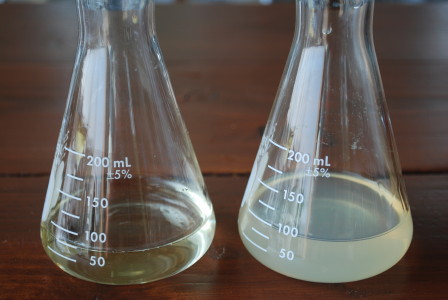
078 It was certainly the first time he’d attempted making perry with authentic perry pears, and there wasn’t a lot to work with. In the photo are samples of the two different perrys that he made from the two different varieties. Then he added some fermented, oak-aged cider from some underripe Bartlett culinary pears that came into the cider house, which did affect the overall end result. 
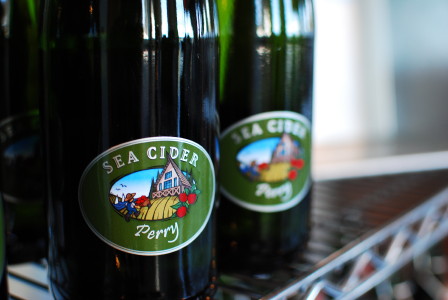
DSC_2455 Sea Cider did another harvest in 2009, and made a new perry, again a blend of perry pears and some culinary pears, but they were only able to make a total of 60 cases, now available at their shop and a few other places, check the website for more details..  Sea Cider co-owner Kristen Jordan explained to me that the trees are biennial, they only produce fruit every other year, so that’s why supplies are limited.
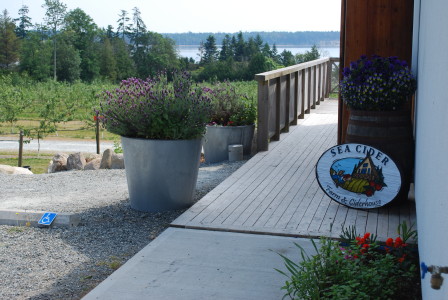
092 There aren’t a lot of companies making authentic apple or pear ciders in BC, there could be some sort of resurgence going on if Sea Cider and other cideries stick with crafting these unique blends. I think our palates are becoming much more sophisticated now, and more people are looking for different taste experiences.  It’s not going to be a fast process, but if you look at what our BC wine industry used to be like 30 years ago and how much it has improved, that will give the craftsmen on the island here like Sea Cider and Merridale Cider some optimism.  And Alistair Bell says if they continue to make the product, maybe more people will grow the kind of apples and pears they need to make the best tasting stuff.
Posted in Island Artisans | 1 Comment

How to Be a Food and Travel Writer

Aqua clipThere's still time this week if you want to enrol in the current session of my online Food and Travel Writing course offered through the UBC Writing Centre. Learn how to turn your travel and culinary experiences into magazine articles, blogs or newspaper items!

This program gives you one-on-one online access to me as your instructor for eight weeks. I'll guide you through the process of approaching editors, crafting query letters and making sure your ideas will get published. Weekly writing assignments, readings and instruction are supplemented by audio interviews, web clippings and photography tips. Students will also have a chance to contribute to discussion forums. Just click here to get to the UBC Writing Centre website to enrol.

I just posted the readings and assignments for Week One, but if you enrol in the next couple of days you'll have lots of time to get right into the fun…feel free to contact me if you have any questions.

In case this is your first time visiting this blog, a bit about me:

I am a British Columbia-based writer and broadcaster. Over the past 25 years, I have produced hundreds of items about food for CBC Radio, and have written on food and travel for a variety of publications, including enRoute, The National Post , The Globe and Mail , Western Living magazine, Northwest Palate magazine, and Small Farm Canada magazine. Visit my web site: www.dongenova.com. 

I don't like to boast, but I saw someone else brag about who they've met on their blog and thought, 'I can top that!'  I have not only met these food luminaries, but I have conducted personal one-on-one interviews with them.  I pass some of my knowledge about their craft onto you…

Anthony Bourdain, Jamie Oliver, Paul Bocuse, Jacques Pepin, Iron Chef Morimoto, Rob Feenie, Gael Greene, Sarah Moulton, Graham Kerr, Mark Kurlansky, Mark Bittman, Frances Mayes, Eric Ripert, Donna Hay, Michael Smith, Vikram Vij, Tojo, Anna Olson, Bonnie Stern, Lucy Waverman, Barbara Kafka, Michael Pollan, Ted Reader, Susur Lee, and so on.

Posted in Announcements, Classes | 3 Comments

Island Artisans – Denman Island Chocolate

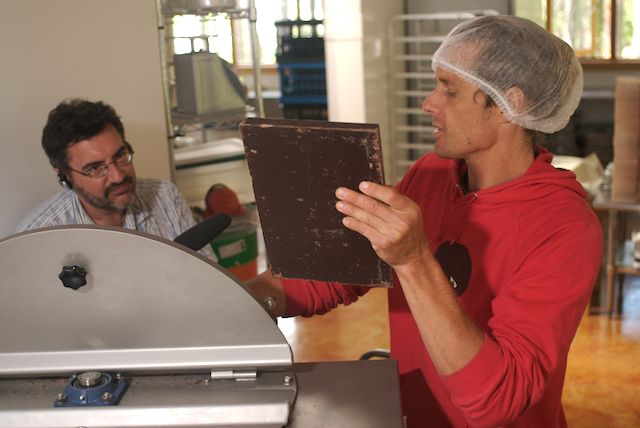
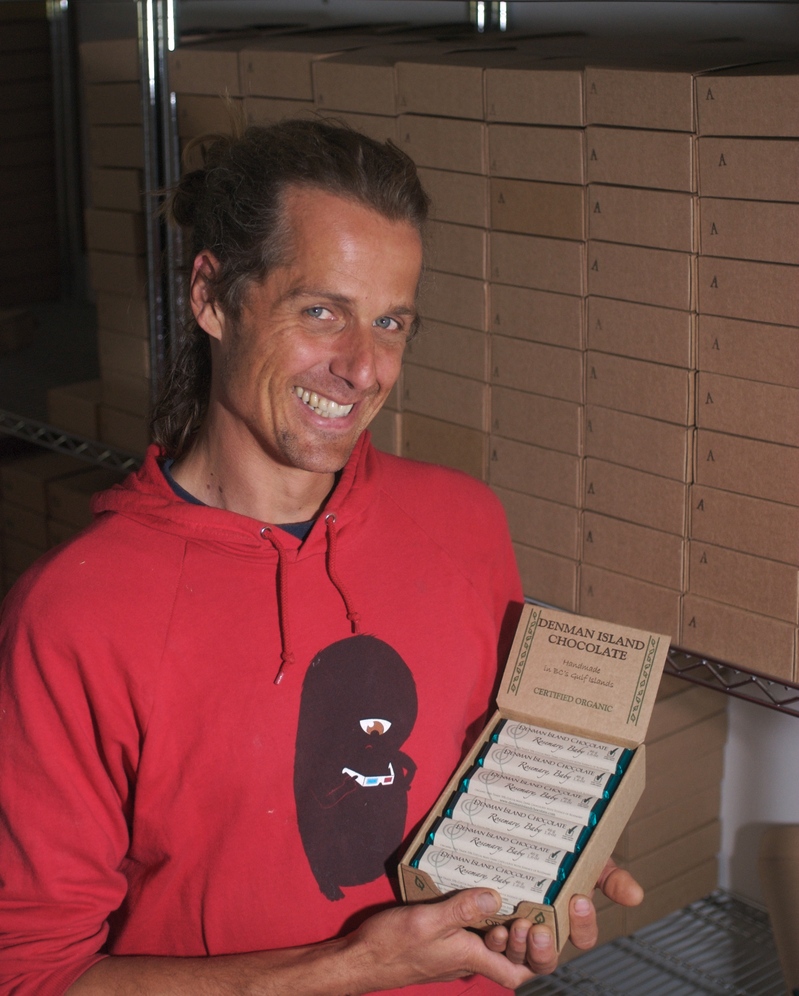
Dsc_4451_1This week on Island Artisans, a visit to the Denman Island Chocolate factory with owner Daniel Terry, pictured left.  Denman Island Chocolate bars are available across Canada and the United States in retail outlets and by mail order.  Just visit the website for more info…but you should know that all the Denman Island Chocolate products are certified organic.

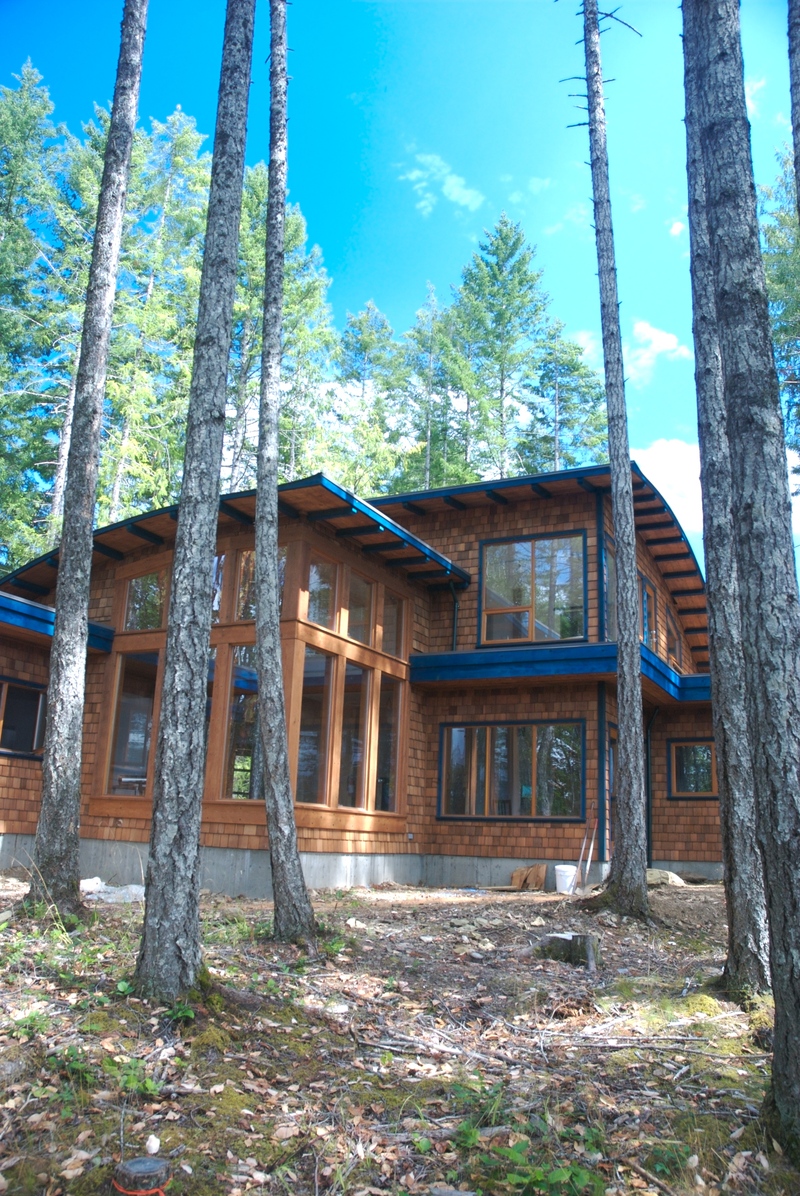
Dsc_4373 This is the new facility Daniel built to house the chocolate-making premises.  It's in a beautiful setting on a ridge overlooking the ocean.

He has placed a permanent covenant on the ridge so it can never be built on…

Daniel stopped by my place in Cobble Hill on Sunday morning to talk about some new chocolate bars.  One is called 'Holy Mole', a take on Mexican chocolate, a very spicy bar using organic chipotle chile powder, essential oil of orange and dark chocolate.

The other bar is very special, and will only be available as a limited edition in a couple of weeks.  Daniel managed to get about three-quarters of a ton of single plantation, single vintage, organic chocolate from a cacao producer in the Peruvian Amazon.  Nothing else will be blended with this chocolate before he puts it into bars. (it has a little bit of vanilla in it already) I got to taste the chocolate in oversize chocolate chip size, and it is very aromatic….Daniel says it has a flavour of banana…I think it has the flavour of those little strings that stick to your banana after you peel it, so maybe a little more tannic in nature.  The final bar will no doubt taste a little differently after tempering, molding and cooling.  It will be called 'Alto El Sol'. Look for the Peruvian-style artwork on the wrapper.

!cid_9071680C-67D8-480E-B9CC-D0C8D0FF512B
One other note on special bar: Some of Denman Island Chocolate's regular 60% dark bars will be labeled with a special photo of mountain goats in the Flathead Wild area of British Columbia.  Some of the proceeds from this bar go toward helping the Sierra Club and other environmental groups protect the Flathead Wild, part of the Flathead River Valley that straddles Alberta, BC and Montana right on the Continental Divide.

Posted in Announcements, Island Artisans | 1 Comment

Island Artisans – Artisanal Coffee Roasting in the Cowichan Valley

 Drum roaster 1

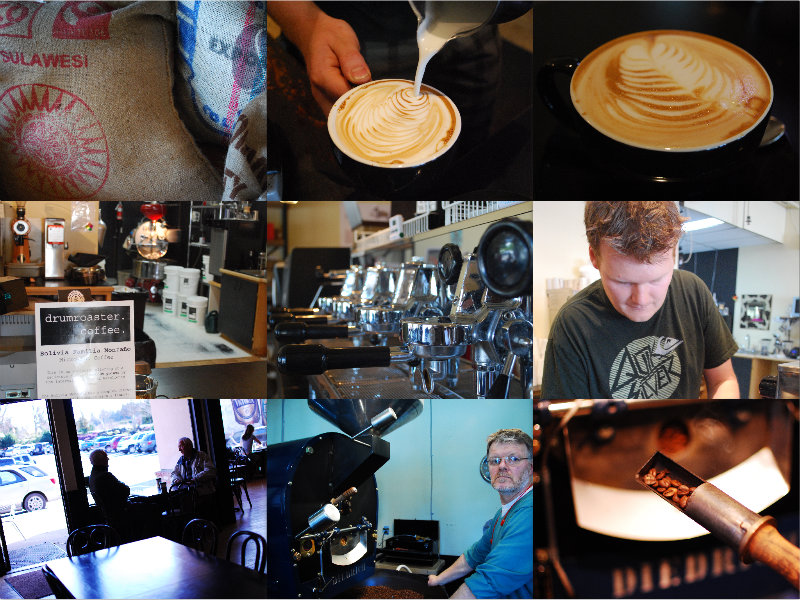
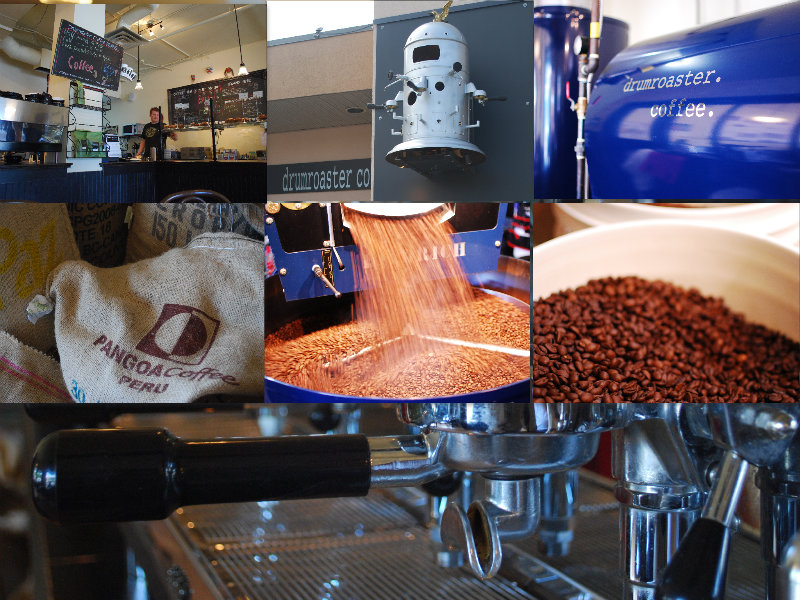
Today on Island Artisans I talked about Geir Oglend and his family, who own and operate Drum Roaster Coffee in Cobble Hill, in the Valleyview Mall just off the Transcanada Highway in the Cowichan Valley.

More and more coffee shops across the province are roasting green coffee beans into the little brownie/black nuggets we’re used to seeing get ground up for our coffee beverages. Coffee drinkers have a growing awareness of the quality of our ingredients and the realization that there can be so much variation available to us in the flavour of a cup of coffee or espresso depending on where the coffee beans come from, how they are blended AND how they are roasted.

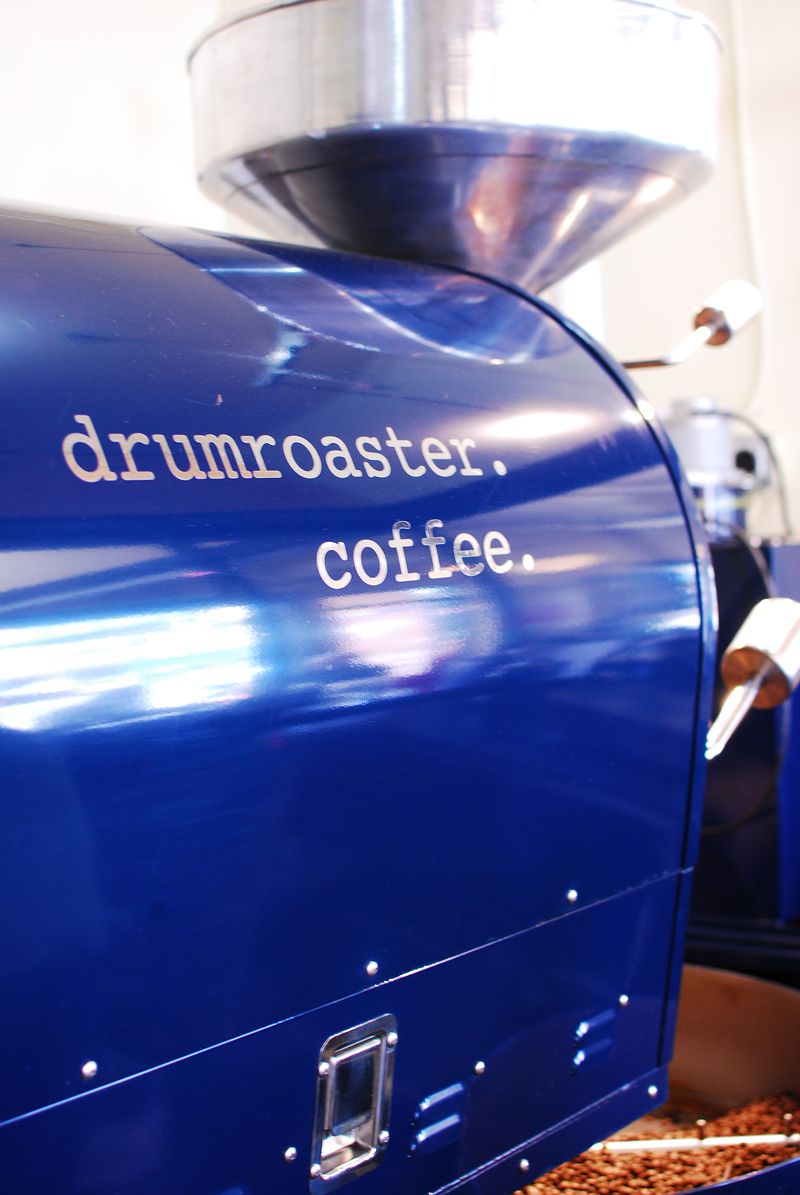
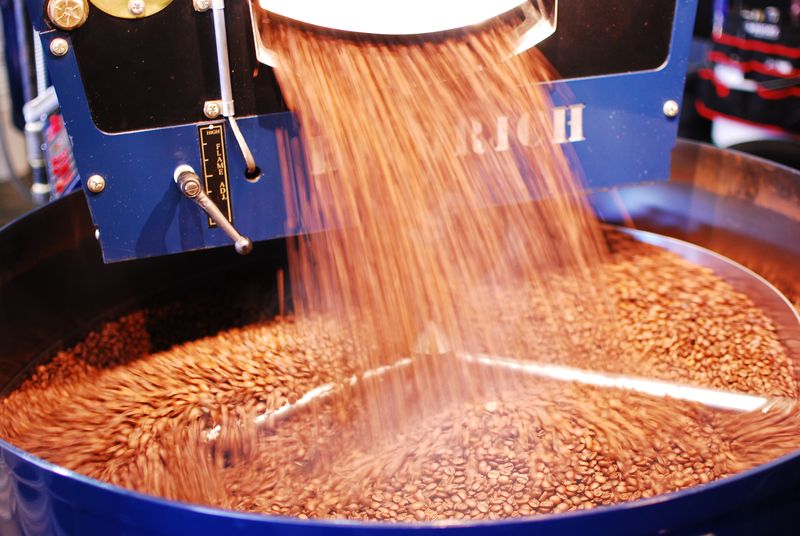
DSC_2188 Geir Oglend's coffee shop, the Drum Roaster, is about a five-minute drive away from me in Cobble Hill.  He just installed a brand new Diedrich drum roasting machine and have enclosed it in a special glass-walled room so you can watch all the action, and that’s where we chatted about Geir’s fascination with coffee. He was born and raised in Norway, where coffee culture and appreciation was much more developed at that time than in North America, and Geir admits he loved coffee from the time he was a little kid.

So this love of coffee turned into his career, especially when he traveled around Europe, saw people lining up to get into cafes, and realized there could be an economic upside to this.  He had a small coffee shop in Norway, then when he moved to Victoria in 1988, started a coffee shop and hasn’t looked back since then.

Roasting your own beans is definitely another layer of art added to the raw product. When he started up the first coffee shop, and then went on to found Serious Coffee, which is an expanding chain of shops here on the Island, he realized he just wasn’t getting the quality, flavour and the freshness of roasted coffee he was used to in Europe, so he started roasting for himself. And when he left Serious Coffee behind he still wanted to maintain control of that quality, so even though he has just one coffee shop now, he roasts every bean that gets turned into a cup of coffee in the shop.  Now, I’ve been to other roasters, and many of them use computer programs to control the roaster temperature and timing, but Geir will have none of that, he says the computer can't take into account the variations in individual batches of beans, or the humidity, and it can't listen to the beans.

DSC_2181 Part of what Geir listens for when he is roasting is something called the ‘first crack’, when the beans reach a certain temperature and you can hear them start crackling.  He usually stops before the ‘second crack’, at a higher temperature, because he thinks that’s where the flavour starts to break down. But every different type of bean can get a different treatment of time and temperature to get it just right.

Geir has a flavour and aroma wheel for coffee that lists some 600 different aromas and flavours you may get from coffees, and he does bring in green beans from around the world, as much as possible they are organic and fairly traded.  And I just have to mention again that the Drum Roaster is very much a family business.  One of Geir’s sons, Carson, helps him run the place and creates marvellous latte art, and Geir’s wife Pat makes from scratch every morning, wonderful baked goods. The Achilles’ heel of my diet are Pat's orange coconut brioches.  I try to limit myself to one a week…

Drum roaster 2

Posted in Island Artisans | 2 Comments

How To Enjoy Your Weekend in the Kitchen

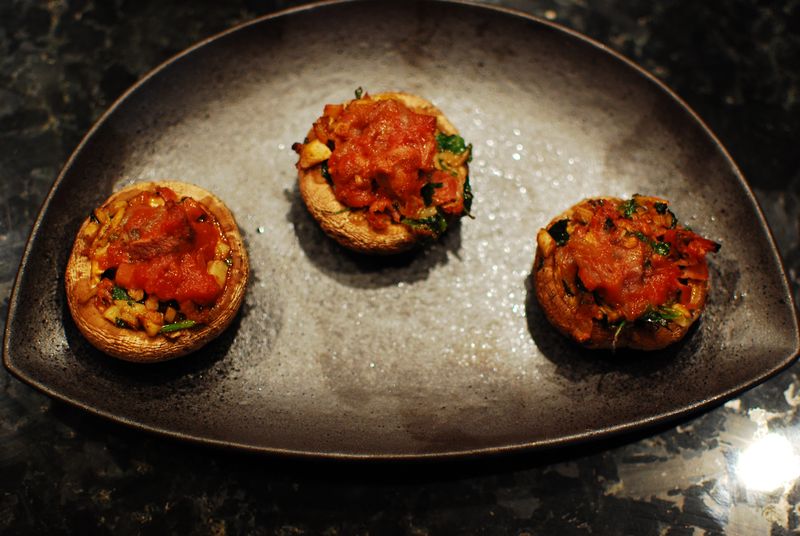
DSC_2131Most of my 'food'-weekdays are spent consuming leftovers from weekend cooking jags, but when I hit Saturday and Sunday again I'm ready for new adventures in the kitchen.  Ramona and I scan favourite websites, check out what Lucy Waverman is writing about in the Globe and Mail Saturday edition, and go through both old or new cookbooks that happen to catch our fancy.  Saturday's appetizer was truly an 'ad lib' as we like to say in the radio business.  It's based on a plate of juicy, hammy, lemony, garlicky, giant mushrooms I enjoyed several years ago in a subterranean tapas bar underneath the Plaza Mayor in Madrid.

All the place seemed to serve was jugs of sangria and these huge mushrooms that were griddled and stuffed with ham and garlic and lemon, if memory serves.  The cooks kept pressing them down flat on the griddle with big spatulas and they were served with oversized toothpicks, you were supposed to use two at a time to pick up the mushroom in between them, kind of like miniature chopsticks.  I think I just ended up using my fingers. Since then I have recreated the recipe with some success on my barbecue.  This weekend I plucked the stems out of the large mushroom caps and chopped them fine.  Into a hot frypan with some chopped prosciutto, garlic and then a big handful of parsley and salt and pepper and a lashing of smoked, hot Spanish paprika.  Stuffed the caps, then, since I had some duck ragu left in the fridge, put a big dollop of that on top of each mushroom.  Onto a very hot grill, doused a few times with lemon juice, and serve.  Fantastic!

The main course was a fresh halibut fillet topped with a marinade Lucy Waverman had intended for steak, and served with fresh pineapple salsa, also a Lucy recommendation, designed for jerk pork.  See how we like to ad lib?

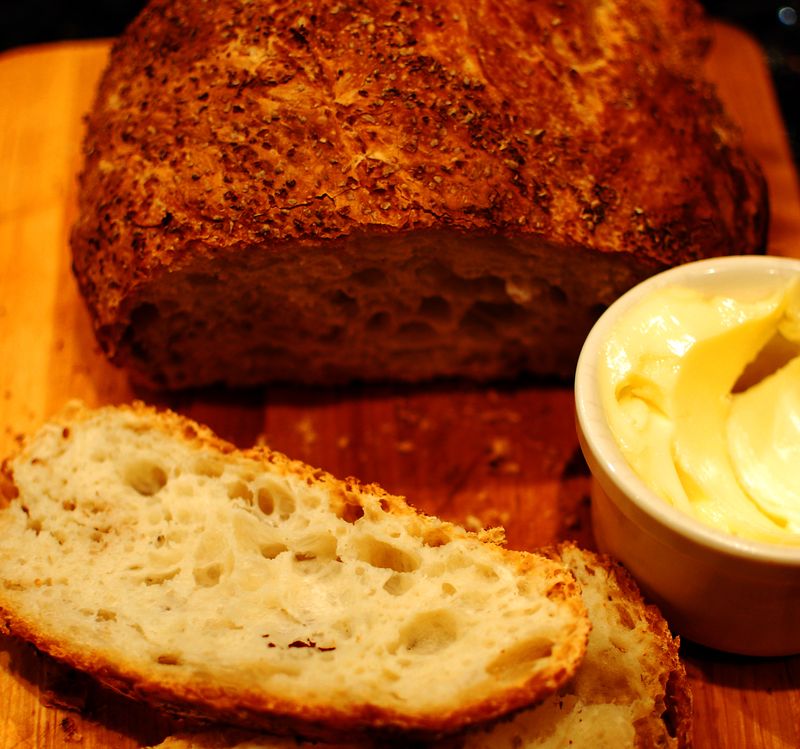
Bread I bought a new book on bread a few weeks ago and it was finally time to get baking.  It's called 'my bread, the revolutionary, no-work, no-knead method', by Jim Lahey.

Hey, his method works!  You just have to plan your time.  After simply mixing together flour, yeast, salt and water in a bowl, you cover and leave it for 12-18 hours. Then dump it out, shape into a ball, leave it for another 2 hours or so in a warm place, and heat something like a Le Creuset or Emile Henry or cast iron pot with a cover in your oven.  Put in the risen dough, cover, bake for half an hour, lid off, another 15 or 20 minutes and you're done.  Oh, it was so good!  I have never baked bread that tasted so close to what could be achieved in a real bakery.

DSC_2143

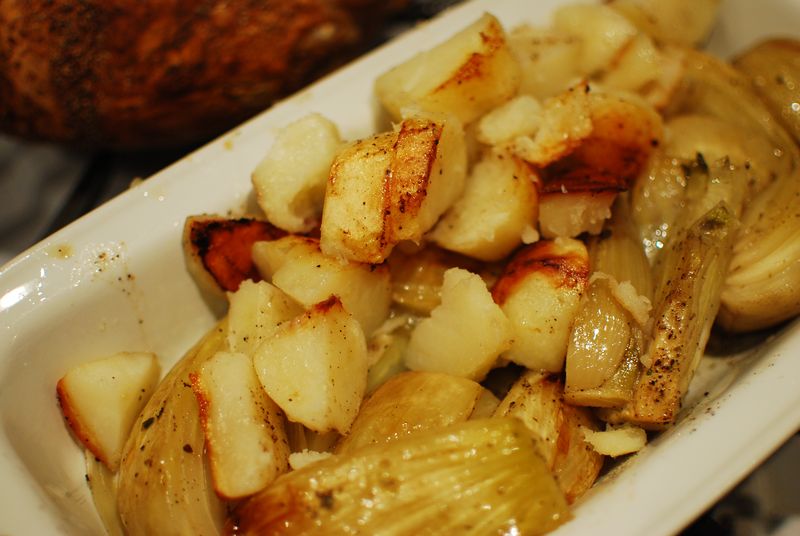
A marinated sirloin steak came off the barbie just as the bread had cooled enough to slice. I had also stuck some wedges of fennel with seasoned salt and olive oil, and a few peeled and chopped potatoes with duck fat into foil packages onto the barbecue for about half an hour.  So tender, so flavourful.  Steak was grass-fed beef, also awesome.

DSC_2141 It was all washed down with one of our favourite wines, an Australian Petit Verdot from the Pirramimma winery.  It's a splurge, but well worth it.  Dessert tonight?  I just had to have another piece of that bread with a seldom-indulged guilty pleasure:  A nicely spread layer of Nutella chocolate hazelnut spread.  Hope you all had as nice a foodie weekend as I did!

Posted in All You Can Eat Test Kitchen | 2 Comments

How To Find Local, Fresh Veggies in March (at Brambles)

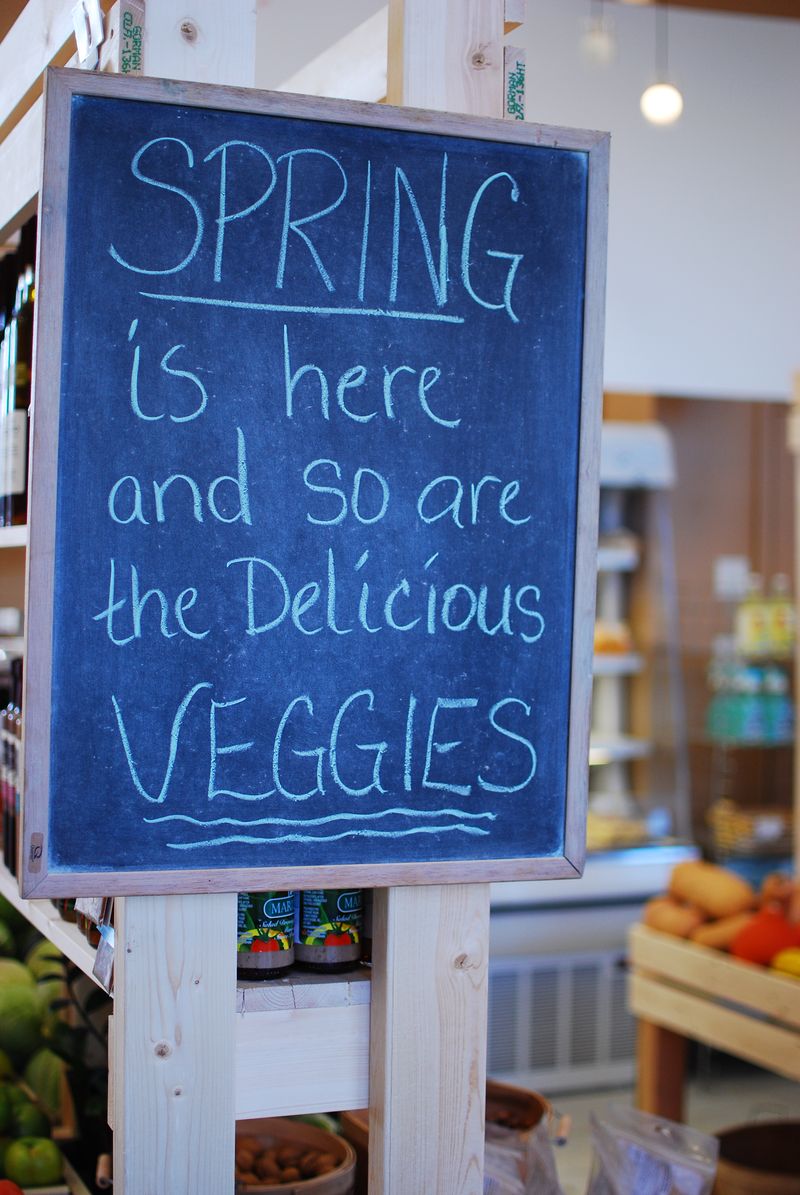
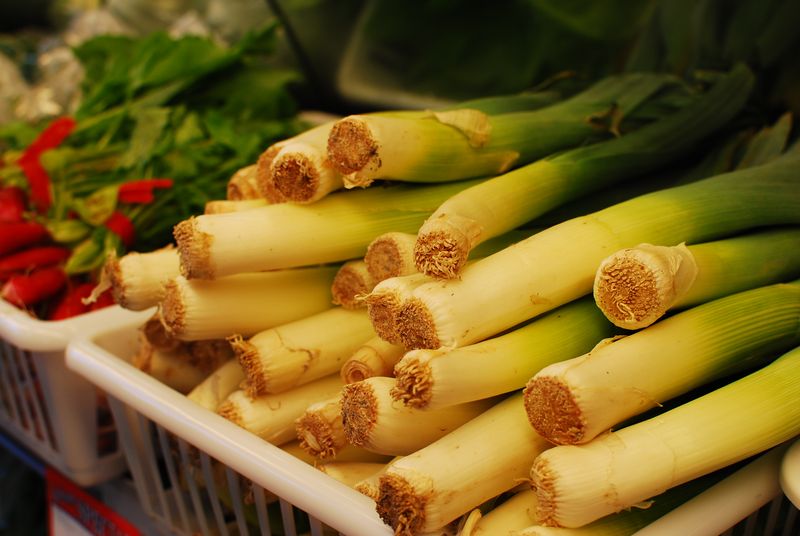
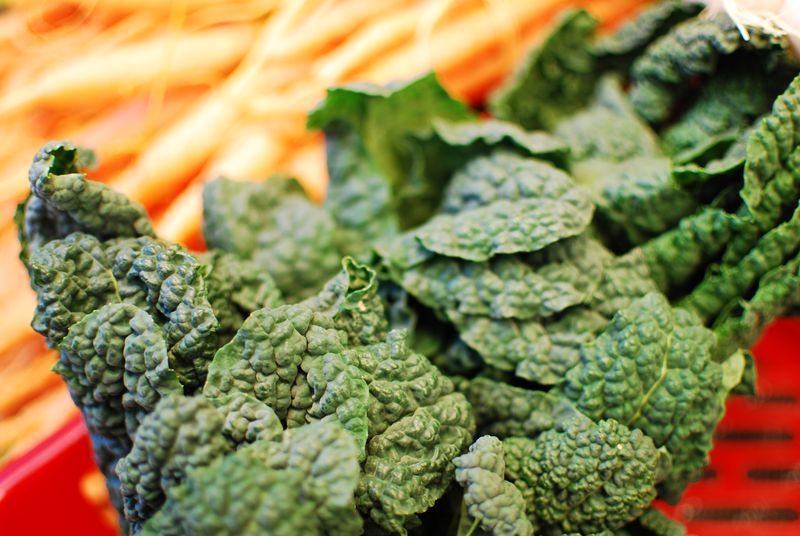
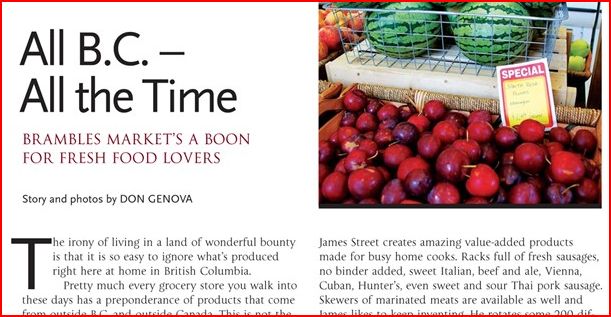
DSC_2069While most of our gardens have been sleeping under snow, or leaves, or other forms of mulch, industrious farmers on the Saanich Peninsula have been very busy in their greenhouses, and so has Angeline Street of Brambles Market in Courtenay, who drove all the way down island to pick up the fresh produce and put it up for sale at Brambles.  We're talking first week of March, here, and I came home with a bunch of greener than green, fragrant arugula, sharp radishes, baby carrots and baby bok choy. I could also have loaded up my basket with leeks, leaf lettuce, chard and small white turnips, complete with their glorious, edible green tops.

I'm featuring Brambles in the next issue of Aqua magazine, and will post that link when it is published.  But do yourself a favour and if you are anywhere near the Comox Valley, make sure you stop in at Brambles, where Angeline and her husband, Chef James Street, have stocked a bright and airy shop entirely with foods produced in British Columbia.  James makes fresh sausages from locally raised meats and those are going on the barbecue tonight for dinner.

Ramona made a most excellent arugula salad last night, and we savoured every bite! I simply steamed the baby bok choy for a few minutes and added a splash of soy sauce to serve. Nom, nom, nom!

DSC_2058 DSC_2061 DSC_2066 DSC_2067

Posted in Island Artisans, Restaurant News, Travel | 1 Comment